ERIK Adam H GROESCH .art
ERIK Adam H GROESCH .art
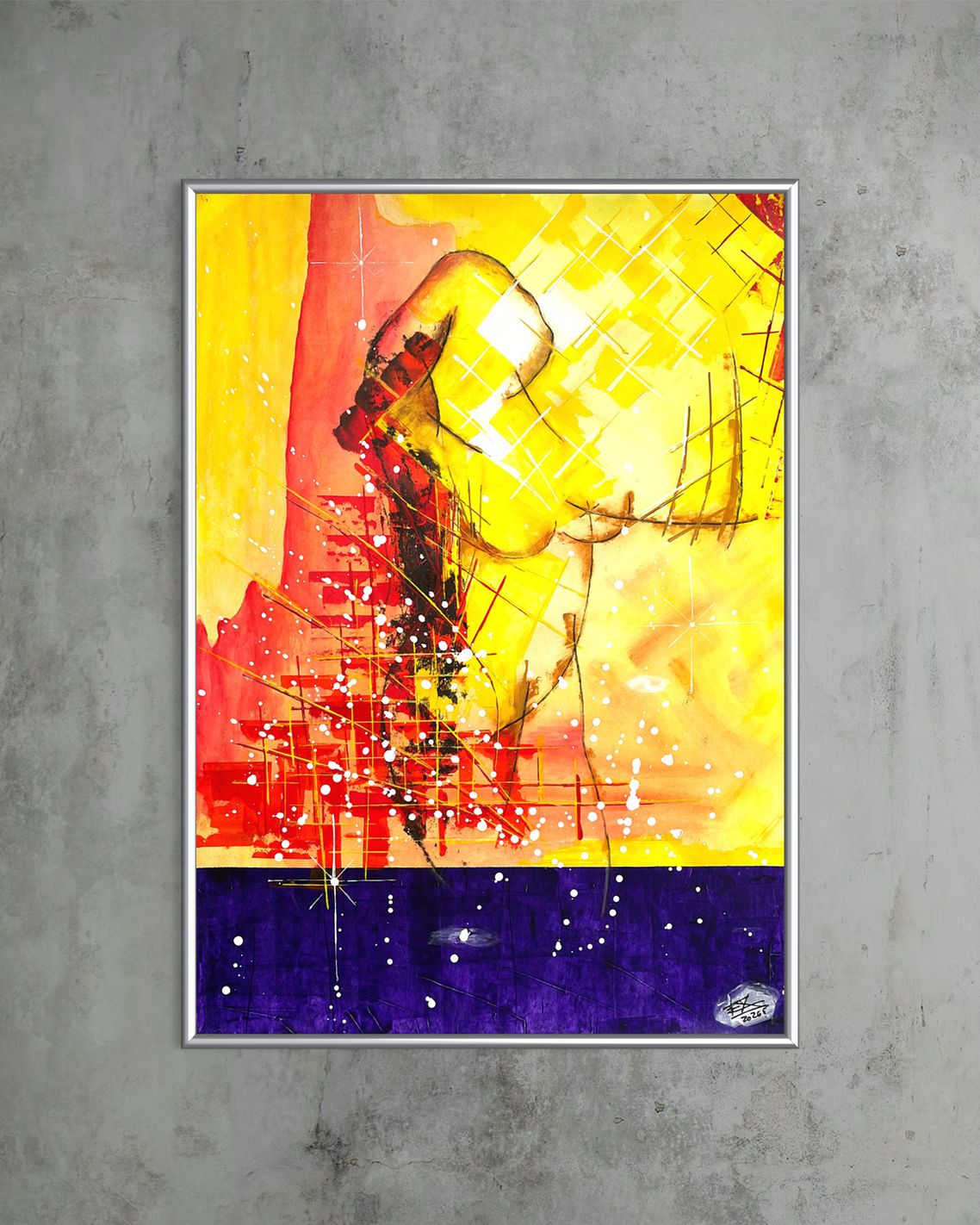
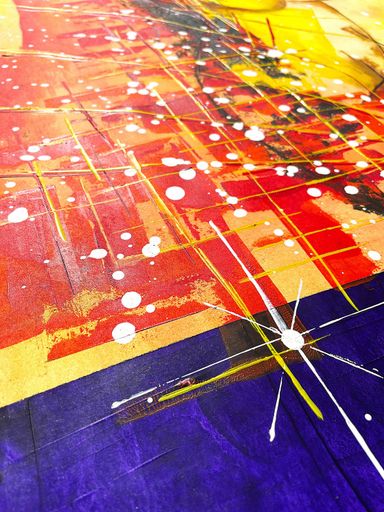
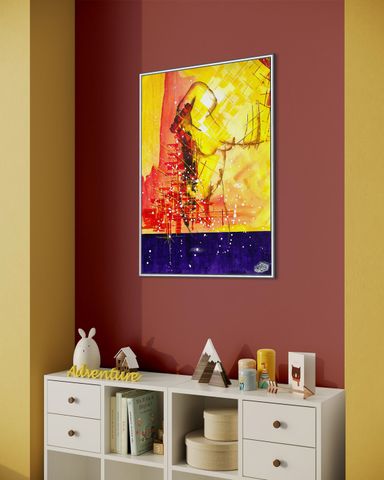
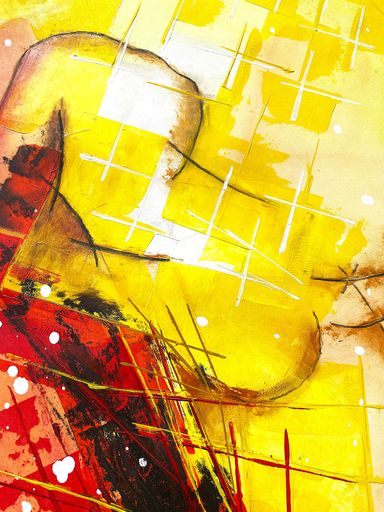
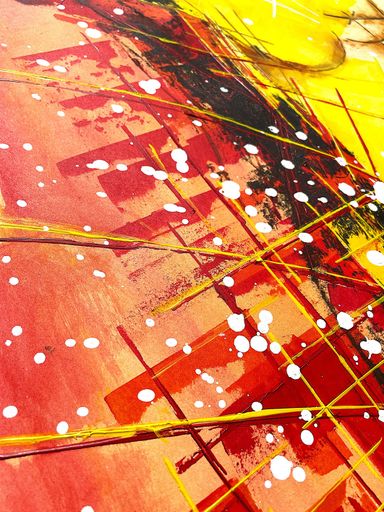
Title: Fragmented Reality
Artist: Erik Adam H. Grösch
Dimensions: 70 × 100 × 0,1 cm
Medium: Acrylic on non-woven wallpaper
Year: 2026
Framing: Brushed aluminum, silver, with glass
[Framed dimensions: 71 × 101 × 2,2 cm | Weight: 6 kg]
Catalog Number: EAHG – AcV2625
Certification: Seal | X , PDF | X
Price: € 3400.-
The starting point for this work is once again the perception of a bodily form – a posture, a curve, a particular view of the female body that first finds its way into the sketchbook in a reduced and intuitive form. Not as an anatomical study, but as an immediate response to form and proportion.
Here, the figure appears in a pose that immediately recalls the act of looking into a mirror: “Mirror, mirror …” Yet the mirror has been replaced by a smartphone. The personal gaze becomes a photographic gaze upon one’s own image – and with it, a gaze shaped by the expectations attached to that image.
The answer to the question of our own image seems to be hidden somewhere behind the many digital mirrors of our time. What do we actually see – and what do we see because we have learned to want to see it?
"Fragmented Reality" describes a reality that is no longer composed of a single image, but of countless fragments, reflections and expectations. The concrete body becomes an open surface for projection – of self-image, the image others have of us, and the gaze of those around us.
Original ger.:
Ausgangspunkt dieser Arbeit ist erneut die Wahrnehmung einer körperlichen Form – eine Haltung, eine Kurve, ein Ausschnitt des weiblichen Körpers, der zunächst intuitiv und reduziert im Skizzenbuch festgehalten wird. Nicht als anatomische Studie, sondern als unmittelbare Reaktion auf Form und Proportion.
In diesem Werk erscheint die Figur in einer Haltung, die unmittelbar an den Blick in den Spiegel erinnert: „Spieglein, Spieglein …“ Doch an die Stelle des Spiegels tritt das Smartphone. Der eigene Blick wird zum fotografischen Blick auf das eigene Bild – und damit zugleich zum Blick auf die Erwartungen, die mit diesem Bild verbunden sind.
Die Antwort auf die Frage nach dem eigenen Bild scheint dabei irgendwo hinter den vielen digitalen Spiegeln unserer Zeit verborgen zu liegen. Was sehen wir tatsächlich – und was sehen wir, weil wir gelernt haben, es sehen zu wollen?
"Fragmented Reality" beschreibt eine Wirklichkeit, die nicht mehr aus einem einzigen Bild besteht, sondern aus unzähligen Ausschnitten, Spiegelungen und Erwartungen. Der konkrete Körper wird zur offenen Projektionsfläche für Selbstbild, Fremdbild und die Blicke anderer.
Wir benötigen Ihre Zustimmung zum Laden der Übersetzungen
Wir nutzen einen Drittanbieter-Service, um den Inhalt der Website zu übersetzen, der möglicherweise Daten über Ihre Aktivitäten sammelt. Bitte überprüfen Sie die Details in der Datenschutzerklärung und akzeptieren Sie den Dienst, um die Übersetzungen zu sehen.